There is a Japanese aesthetic called wabi-sabi that most Western audiences have gotten completely wrong.
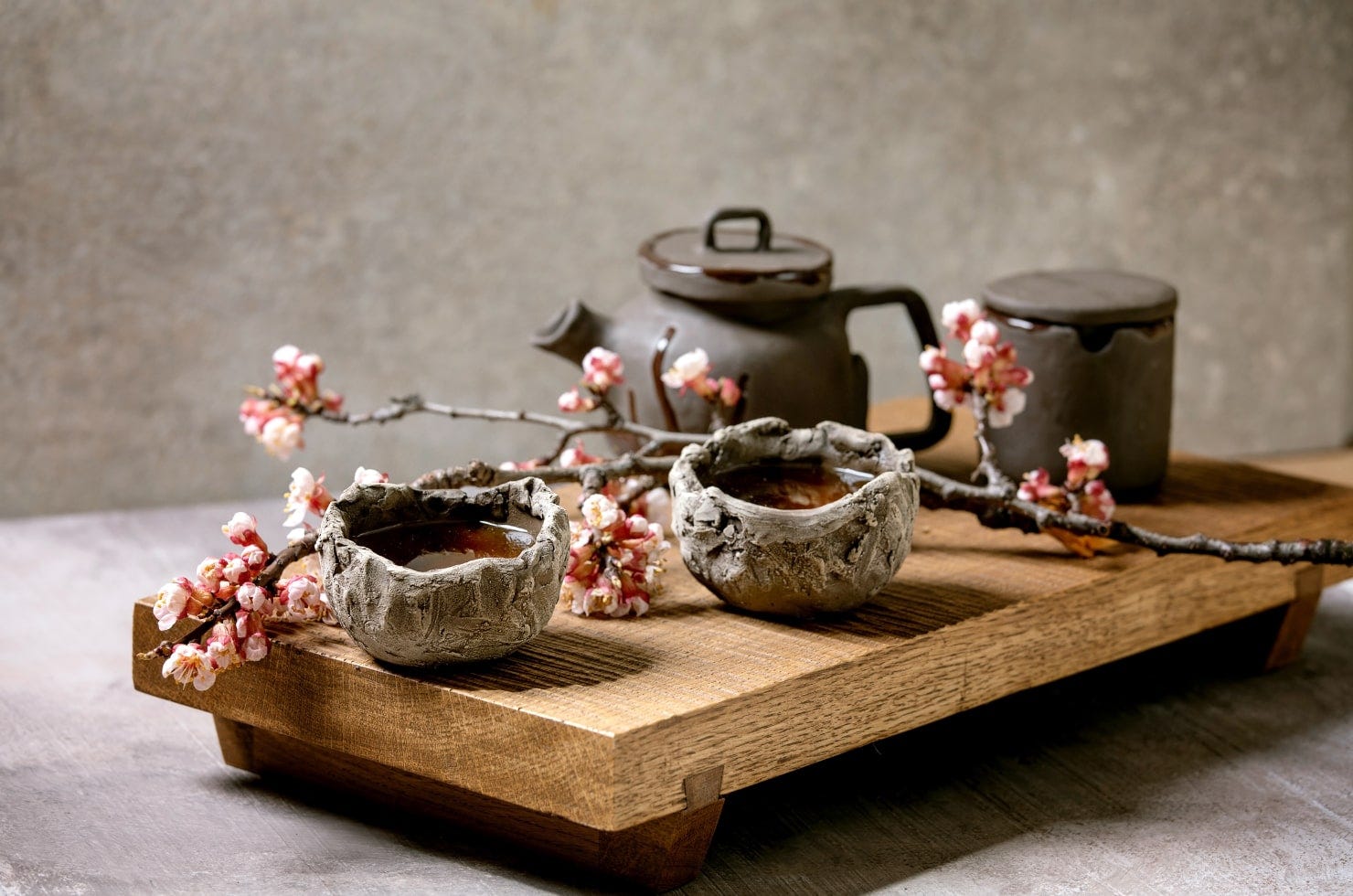
The Instagram version of wabi-sabi looks like a perfectly imperfect handmade ceramic bowl on a linen tablecloth next to a minimalist flower arrangement. Curated imperfection. Styled rusticity. It is beautiful to look at and has almost nothing to do with the actual philosophy.
Real wabi-sabi is harder than that. It is three words:
Nothing lasts. Nothing is finished. Nothing is perfect.
Sit with those for a moment. Not as an aesthetic. As a truth.
• • •
Nothing lasts. The body you had at 35 does not last. The marriage you thought would last forever may not last. The career you built for 25 years may not last. Your parents do not last. The version of yourself that you knew how to be, the mother of young children, the wife, the employee, the woman who had it figured out, she does not last either.
Nothing is finished. You are not done becoming who you are. Your story is not complete. The chapter you are in right now is not the final one, even if it feels like an ending. Your relationship with your body is not finished evolving. Your understanding of love is not finished deepening. You are, at sixty, at fifty-five, at seventy, still a work in progress. That is not a failure. That is the design.
Nothing is perfect. Your life does not look like the brochure. Neither does anyone else’s, no matter what their Instagram suggests. Your choices were imperfect. Your timing was imperfect. Your body is imperfect. And all of that imperfection is not something to fix or hide. It is something to inhabit. Fully. Without apology.
• • •
I discovered wabi-sabi during a period when I was actively trying to fix everything about my life. I was in Florida. My marriage had ended. My relationship with my daughter was fractured in ways that felt permanent. My career was in transition. My body was doing things I did not understand and my doctor was not explaining.
I was reading everything I could get my hands on, looking for the framework that would make it all make sense. And I found this one. Three sentences that stopped me cold.
Nothing lasts. Nothing is finished. Nothing is perfect.
My first reaction was despair. If nothing lasts, what is the point? If nothing is finished, when do I get to rest? If nothing is perfect, why keep trying?
My second reaction, the one that came days later, was relief. Because if nothing is supposed to be permanent, then the hard thing I was in was not permanent either. If nothing is finished, then I was not behind. I was in process. And if nothing is perfect, then I could finally stop performing a version of my life that never existed and start living the real one.
Wabi-sabi is not about loving your flaws. It is about recognizing that flawlessness was never the goal.
Here is where it applies to you, right now, wherever you are reading this:
Your body has changed. Wabi-sabi says: of course it has. Nothing lasts. The question is not how to get the old body back. The question is how to inhabit this one with presence and care.
Your life is messy. Wabi-sabi says: of course it is. Nothing is perfect. The question is not how to clean it up. The question is whether you can find something beautiful in the mess. Not in spite of it. Inside it.
You feel unfinished. Wabi-sabi says: of course you do. Nothing is finished. You are not supposed to feel complete. You are supposed to feel alive. And alive means still becoming.
This is the first of thirty Japanese concepts I will explore in The Lotus Chronicles. They come from a book I have been writing called Where the Lotus Grows, which is a philosophical companion for women navigating difficulty, transition, and the slow, complicated work of blooming in mud.
I chose to start with wabi-sabi because it does the thing that matters most first: it gives you permission to stop pretending your life was supposed to look different.
It looks exactly the way it looks. Imperfect. Unfinished. Impermanent.
And within all of that, there is a beauty that the curated version could never touch.
I still have the journal I was keeping in Florida when I found this. The handwriting is tight and urgent, the way writing gets when you are trying to outrun something. I read it sometimes and I do not recognize the woman who was trying so hard to fix everything. I understand her. But I am not her anymore.
That is wabi-sabi too. She did not last. And I am not finished.
If this landed, subscribe. There is more where this came from.